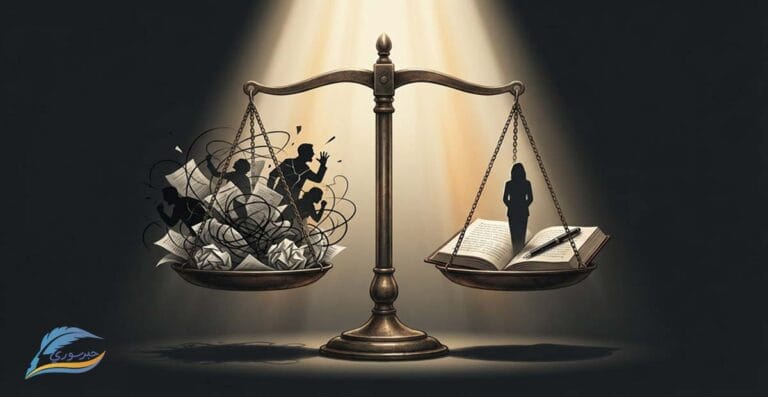

The Constitutional Court… Who Governs the Laws?
In any political system, there is a body that makes laws, a body that implements them, and a body that resolves disputes. But there is another, less obvious question:
Who holds the law itself accountable?
Here lies the role of the constitutional court.
A constitutional court is not an ordinary court. It does not deal with everyday cases such as property disputes, criminal matters, or commercial conflicts. Its function is entirely different: it determines whether the law itself is lawful.
A law, even if issued by an official authority, may contradict the constitution. The constitution is the supreme legal rule in the state. Therefore, when a law or administrative decision conflicts with the constitution, it can be challenged before the constitutional court.
If the court finds that a legal text violates the constitution, it does not merely amend or interpret it—it annuls it, as if the law had never been issued in the first place.
For this reason, the constitutional court is considered the most important guarantee of public rights. It does not protect a single individual in a case; rather, it protects society from laws themselves becoming a source of violation.
In modern systems, the strength of the state is not measured by the number of laws it produces, but by its ability to restrain itself. The constitution is not a symbolic document, but a contract that defines the limits of authority. The constitutional court is the mechanism that makes this limit real, not theoretical.
The importance of such a court becomes especially clear during transitional periods. These phases usually witness the issuance of many decisions—administrative and regulatory—and the boundaries of authority are often unclear. The question then is no longer whether a decision is useful, but whether the authority that issued it had the right to do so in the first place.
The existence of an independent constitutional court means that political disputes can be transformed into legal disputes capable of resolution. Its absence means that every administrative or political disagreement may turn into a public crisis, because society lacks a neutral body to turn to.
Simply put:
The constitution sets the rules,
and the constitutional court protects those rules from everyone—including the state itself.