Between Political Realism and the Test of Memory
Politics, it can be said, has its own logic. Those who enter it are sometimes compelled to use a language that does not resemble the collective memory of victims — even if they themselves are among them — or to accommodate forces implicated in violence under the banners of interests or necessity. This is not new in political history, nor is it unique to Syria.
In politics, morality is often buried beneath the terms “realism” and “pragmatism.” These are the same labels frequently attached to Syrian president Ahmed al-Sharaa, and they appeared starkly during his recent visit to Moscow, where he described Russia as a “blessed land,” wished it safety, and praised its soldiers’ courage during his meeting with Vladimir Putin.
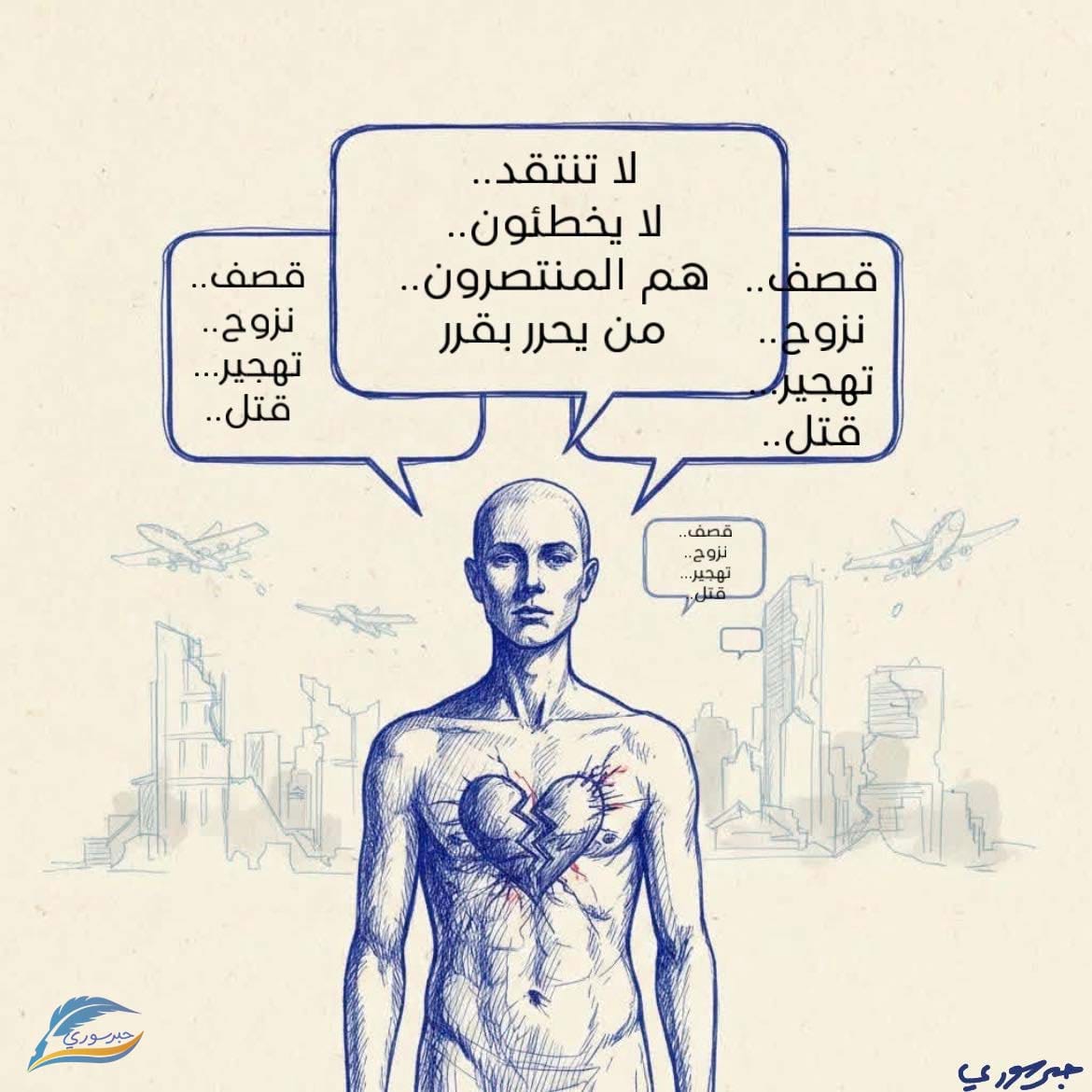
The issue, however, does not stop at the political speech itself. It truly begins with how part of Syrian society received that speech. Russia was never a distant or neutral actor in their tragedy; its military intervention was direct, associated with large-scale bombardment, the destruction of entire neighborhoods, and thousands of casualties — and it rescued the Assad dictatorship when it was close to collapse in 2015.
What Syrians recount about Russia and its actions is not emotional storytelling but documented reality embedded in daily life. In this context, many Syrians do not reject the idea of normal relations with Russia as a major international power. Rather, they link any talk of “normalization” to questions of transitional justice, acknowledgment of crimes, and compensation for the damage inflicted on the country and its people.
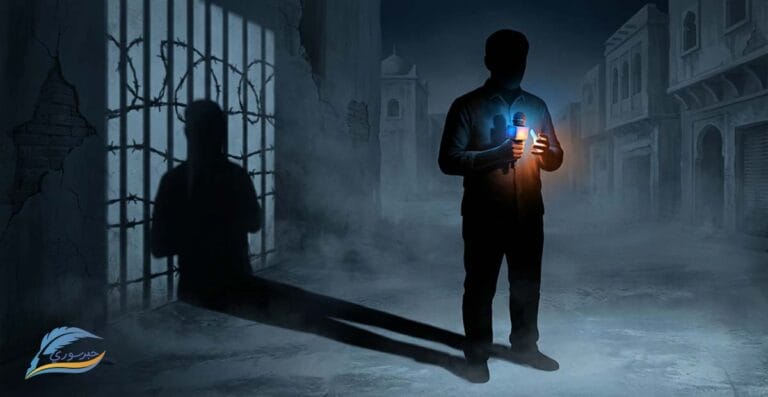
Yet what was striking — and perhaps more dangerous — was not the official statement itself, but the widening defensive discourse surrounding it. A discourse that begins with justification and the manufacture of explanations, and soon turns criticism into something suspicious or unpatriotic. At this point, the phenomenon becomes difficult to interpret politically alone, because at its core it is psychological and social as much as it is political.
Fear accumulated over decades of Assad-era dictatorship, then deepened during fourteen years of war, bombardment, and daily violence. Today it plays a decisive role in reshaping public consciousness. That fear did not end with the weakening of security control or shifts in power balances; instead, it reproduced itself in another form: fear of questions, of criticism, and of recognizing mistakes.
For some Syrians, stability — in any form — has become a value placed above memory, justice, and dignity. In such an atmosphere, defending political rhetoric is less an expression of conviction than a way to avoid a more painful confrontation.
In this context, justification becomes a coping mechanism.
The rhetoric is defended not because it is persuasive, but because admitting its flaws opens a painful door: acknowledging that sacrifices did not necessarily produce a discourse worthy of them, and that the new authority may speak in ways that neither resemble people’s suffering nor recognize it.
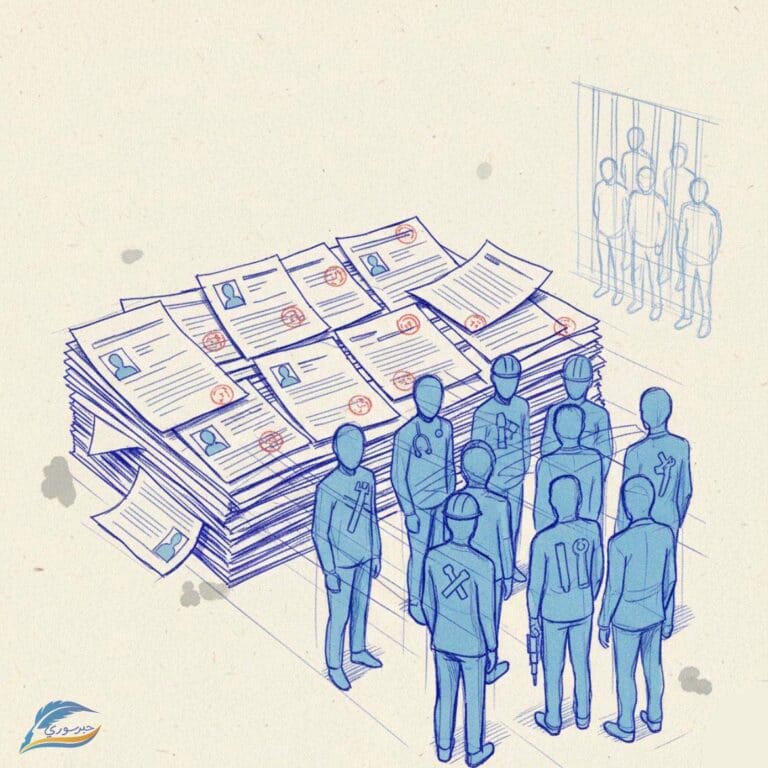
More troubling still, such justification is sometimes presented as “political awareness,” while criticism is portrayed as a threat to stability, nostalgia for chaos, or an inability to grasp the complexity of the moment. In this sense, dissent is not merely rejected; it is symbolically criminalized, and the same logic of exclusion is reproduced in a new language: those who do not applaud are accused, those who question are suspected, and those who object are demonized.
The problem, in truth, lies neither solely in politics nor solely in individuals, but in transforming fear into a public position. Humans err, and politicians err — that is natural. What is not natural is demanding that a society suspend its memory, or justify what contradicts its lived experience in the name of political realism.
What the aircraft destroyed was not only stone, but part of the collective capacity for accountability. True liberation is not completed by changing official rhetoric or alliances, but by society’s ability to distinguish between understanding politics and surrendering memory and the right to criticism.
Fear is understandable, but it cannot serve as the foundation of sound political awareness. And justification, however rational it may appear, cannot replace justice nor erase what people actually lived through.