Al-Hol Camp: When a Camp Turns into a Courtroom
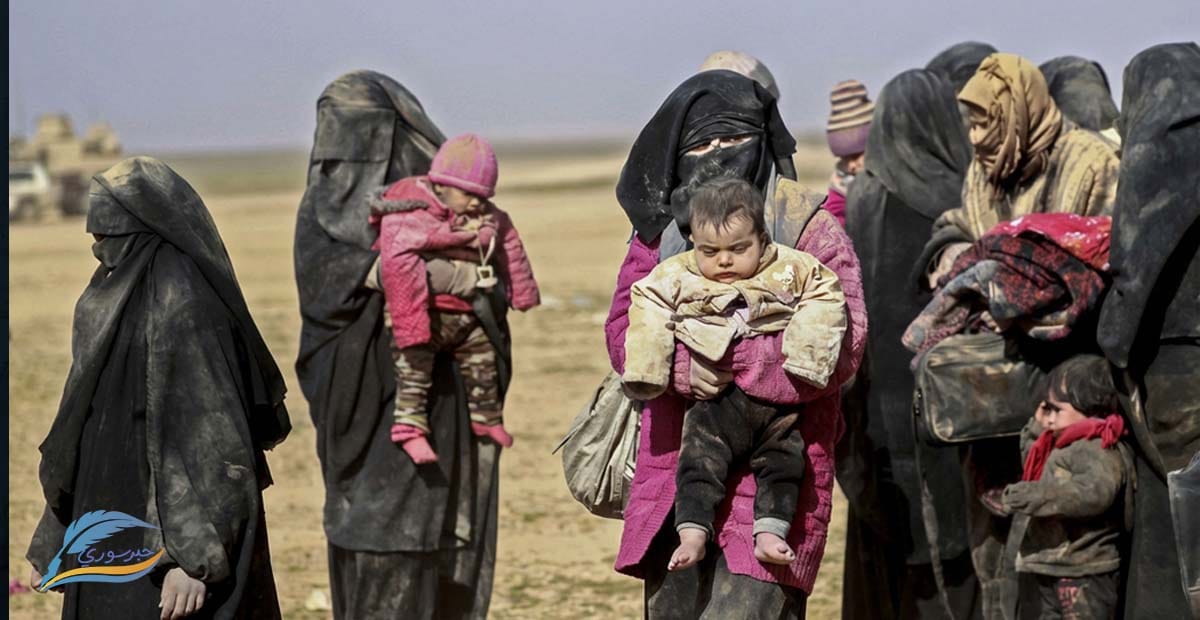
The blackness in al-Hol camp, east of al-Hasakah in northeastern Syria, does not seem merely a color. Many women wrapped in dark abayas, covered with dust, move between the tents. Some carry children on their shoulders; others hold the hands of youngsters walking barefoot or in worn shoes eaten away by sand. A layer of desert dust clings to their faces, as if the place has left its imprint on them for years—since 2019, when the camp expanded and became a detention hub gathering families linked to the Islamic State group after the collapse of its territorial control.
The humanitarian picture inside the camp is harsh, and its background is heavy as well. Residents’ names are associated with ISIS: women described as wives of fighters, relatives, or individuals who found themselves trapped in a context they did not entirely choose. Yet complexity does not erase responsibility.
In recurring video clips, some women address journalists in a sharp tone, calling them “infidels,” while others appear in different scenes asking for help and pleading to leave the camp with their children.
This is less a contradiction than an expression of differing positions within the camp: hardline convictions among some, silence among others—but nearly all share a desire to leave.
A recent development points to security tensions and protests after Syria’s new authorities assumed supervision of the camp instead of the Syrian Democratic Forces. The unrest prompted UN organizations to suspend activities and evacuate staff, noting that operations could resume after reassessing the situation. This is the official description of what happened.
It followed reports of families escaping the camp through routes UN reports described as “irregular,” while Syrian authorities overseeing the camp prevented other families from leaving. Tensions escalated, attacks occurred against organization facilities, and an international team temporarily withdrew.
Beyond the camp’s stereotypical image, the issue concerns not only the mothers’ past but the children’s future. How can a complex security and judicial file involving thousands of people of different nationalities be addressed without turning children into permanent victims of a context they did not choose? And conversely, how can the risks of leaving an environment that still carries signs of ideological extremism be ignored without sustained and serious treatment?
The camp stands at the intersection of these two questions without a clear answer. When humanitarian activities are suspended, the fragility of the existing balance deepens. The camp is not a courtroom deciding guilt and innocence, yet neither is it a normal community that can continue indefinitely. It is a prolonged transitional space, where political and legal files accumulate over simple daily life, and where waiting mixes with fear, and doubt with the desire to leave.
What is happening in al-Hol is a new chapter in an unresolved dilemma: overlapping responsibilities and an international reluctance to repatriate citizens or establish lasting legal solutions. Between hardline rhetoric that sometimes appears before cameras and appeals for rescue and exit, the camp remains suspended between two approaches—a security approach that sees a potential threat, and a humanitarian approach that sees a prolonged crisis.
Reducing al-Hol to a single description does not suffice. It is a place where unaddressed ideas coexist with children growing up in a closed space. The recent protests, and the suspension of activities that accompanied them, are merely another episode in an ongoing story whose direction has yet to be determined.

